Industry Insights
Stagflation: Déjà Vu All Over Again?
April 2026

- The Iran conflict has created substantial energy price spikes reminiscent of the “Lost Decade” of the 1970s
- A repeat of 1970s stagflation isn’t guaranteed; investors should monitor several key metrics going forward
- Investors concerned about stagflation should consider asset classes with enhanced inflation protection
The 1970s Experience: A Decade of Disruption
“Stagflation" represents a rare intersection of stagnant growth, high unemployment, and high inflation. Historically synonymous with the 1970s, it dismantled the Keynesian belief that inflation and unemployment shared an inverse relationship. In 2026, the Iran conflict's energy price shock has revived 1970s comparisons. While the catalysts are eerily similar, significant differences exist between the two eras.
The 1970s stagflation was ignited by two oil shocks (the 1973 OPEC embargo and the 1979 Iranian Revolution), which sent crude prices soaring and acted as a massive tax on consumers and businesses. For investors, the traditional 65/35 portfolio struggled as stocks and bonds fell simultaneously.
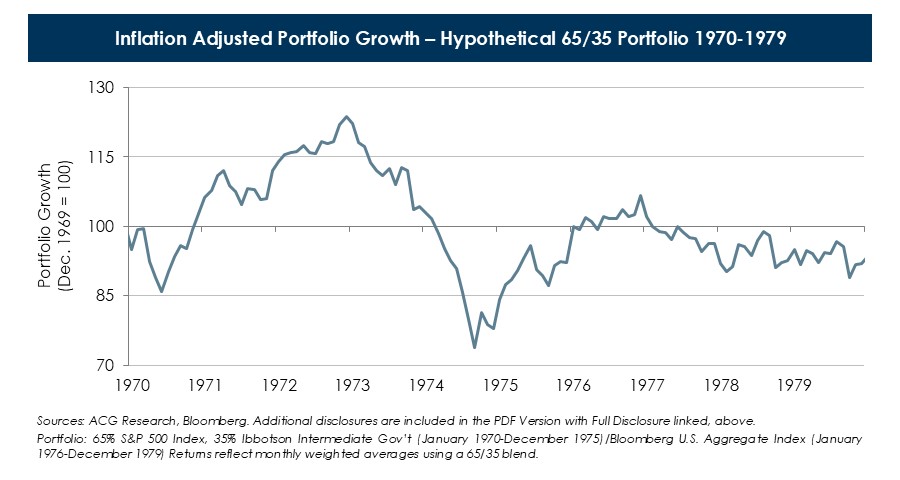
Equities suffered a "Lost Decade." Real returns were often deeply negative, and high interest rates compressed P/E multiples. Fixed income earned the moniker "certificates of confiscation" as rising rates caused bond prices to fall. Commodities, particularly gold and silver, saw historic bull runs as investors sought stores of value.
The 1970s stagflation was ignited by two oil shocks (the 1973 OPEC embargo and the 1979 Iranian Revolution), which sent crude prices soaring and acted as a massive tax on consumers and businesses. For investors, the traditional 65/35 portfolio struggled as stocks and bonds fell simultaneously.
Equities suffered a "Lost Decade." Real returns were often deeply negative, and high interest rates compressed P/E multiples. Fixed income earned the moniker "certificates of confiscation" as rising rates caused bond prices to fall. Commodities, particularly gold and silver, saw historic bull runs as investors sought stores of value.
2026 vs. The 1970s: What is Different?
The 2026 energy spike bears a striking resemblance to 1979, yet the modern economy is built differently:
- Labor Markets: In the 1970s, unionized workforces had cost of living adjustments baked into contracts, creating a wage-price spiral. Today's labor market is more flexible, though demographic shortages have introduced new wage pressures.
- Energy Intensity: The U.S. economy is significantly more energy-efficient today, requiring far less oil per dollar of GDP and potentially softening the blow of a price spike.
- Monetary Credibility: In the early 1970s, the Fed was hesitant to cause a recession. Today, central banks are more inflation-target focused, though they face conflicting data and political headwinds.
Potential Indicators of Imminent Stagflation
Investors should monitor several key metrics to determine if the 2026 energy crisis will solidify into a stagflationary environment.
- The Yield Curve: A persistent inversion followed by rising unemployment often signals the stagnation component is arriving.
- Real Wage Growth: If wages fail to keep pace with the Consumer Price Index (CPI), consumer discretionary spending often declines, contributing to an economic slowdown.
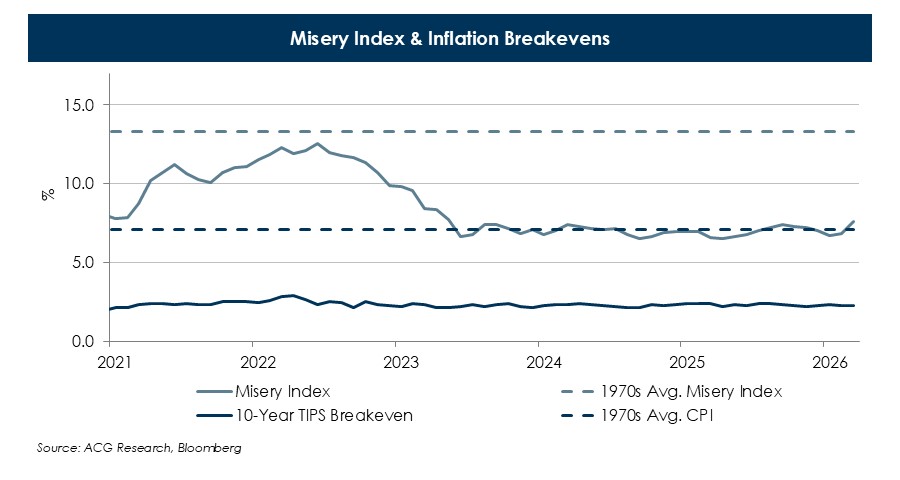
- The Misery Index: A sustained rise in both components of the Misery Index (unemployment rate and inflation rate) could indicate the economy is decoupling from standard cyclical behavior.
- Inflation Expectations: Investors should monitor breakeven inflation rates, which measure the implied inflation expectations in the bond market. Consumers and businesses often change their behavior in anticipation of rising prices, which can lead to a self-fulfilling inflationary cycle.
Portfolio Positioning
Stagflation requires investors to re-examine current portfolio exposures, with particular attention to active management and asset classes that have historically provided inflation protection. Examples include commodities/energy, Treasury Inflation-Protected Securities (TIPs), value/high-quality equities, and short duration bonds. Commodities and energy act as a natural inflation hedge. TIPs protect purchasing power against rising CPI. Value/quality equities focus on companies with strong pricing power and low debt-to-equity ratios that can pass costs on to customers without losing volume. Short duration bonds provide dry powder, allowing reinvestment as rates rise while avoiding potential price collapses in long-dated bonds. Investors should recognize each of these asset classes carries its own risk, including volatility, sensitivity to real interest rates, broad market declines, and the potential for negative real returns, and none eliminates risk entirely.
ACG’s Position
The 2026 Iran conflict has introduced a volatility shock with parallels to the 1970s. While our modern economy is more efficient, the stagflation equation remains: when input costs rise faster than economic output, investors may wish to consider re-evaluating their portfolio positioning. While past performance is not indicative of future results, by focusing on inflation protection, real assets and quality balance sheets, investors have historically experienced beneficial diversification during a stagflation environment.
This material is provided for informational purposes only and is not a recommendation or solicitation to buy or sell any security or investment strategy. Additional important information and disclosures are included in the PDF Version with Full Disclosure linked, above.